Becoming a Board Certified Behavior Analyst (BCBA) is like moving from being a construction worker to being the lead architect.
You’re still on the job site, but instead of just following the blueprints, you’re the one drawing them. The demand for BCBAs is exceptionally high, with employment growing nearly 20% in the last two years.
The job outlook for behavior analysts is strong, with a projected 22% job growth rate from 2020 to 2030 and a 33.5% increase expected from 2016 to 2026, well above the national average for other professions.
As of December 2023, there are over 64,000 BCBAs worldwide, but this number still does not meet the significant need for qualified professionals.
The median salary sits between $70,000 and $90,500, with top earners clearing $132,500 annually.
If you’re an RBT wondering whether the investment is worth it, or a graduate student mapping your next five years, this guide breaks down exactly what the path looks like, what you’ll earn, and how to avoid the possibility of burnout
A Quick Primer on Applied Behavior Analysis
Applied Behavior Analysis (ABA) is the science of understanding how behavior works and how it can be changed to improve lives.
At its core, ABA uses evidence-based behavioral principles to address and modify behaviors that matter most, whether that’s helping a child communicate, supporting someone with developmental disabilities, or improving outcomes in schools and healthcare settings.
The field is guided by the Behavior Analyst Certification Board (BACB), which sets the standards for professional practice and certifies behavior analysts at various levels.
As the demand for effective solutions to behavioral challenges continues to rise, behavior analysts are increasingly sought after to tackle a wide range of behavioral issues.
Whether working with individuals, families, or organizations, professionals trained in applied behavior analysis are making a high-impact difference in real-world settings.
At a Glance: RBT vs. Board Certified Behavior Analyst (BCBA)
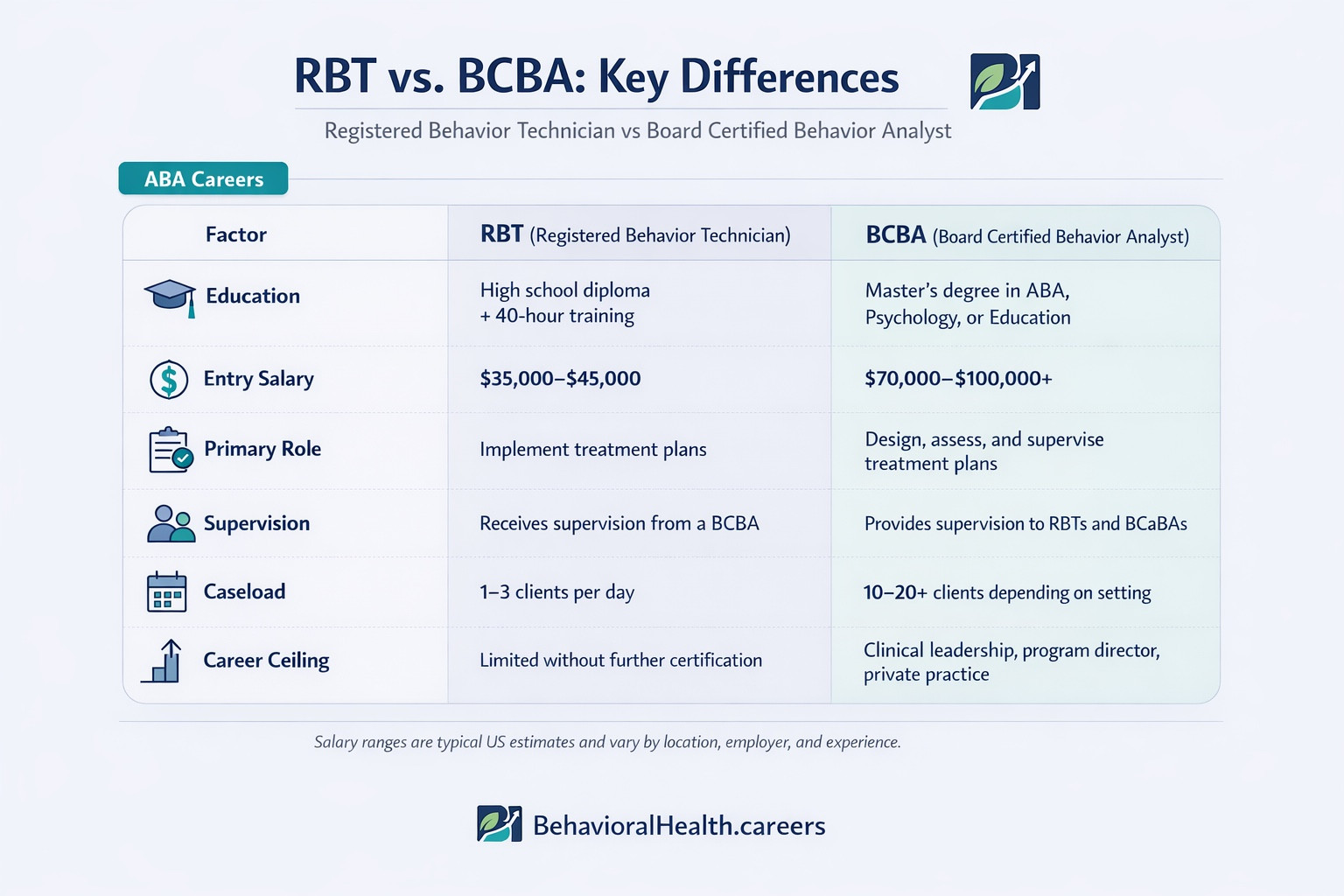
This visual shows the leap you’re making. The education requirement is significant, but so is the shift in responsibility and compensation.
To become a BCBA, you must first meet specific degree requirements, starting with a bachelor's degree in a related field such as psychology or education. This foundational step prepares you for advanced studies and supervised experience in applied behavior analysis.
The application process for BCBA certification involves submitting required documents, paying applicable fees, and carefully following instructions and deadlines set by the certifying board.
The Education Ladder: Master's Degree in Behavior Analysis and Beyond
The first step on the BCBA career path is obtaining a bachelor's degree in Psychology, Education, or a related field. This provides a solid foundation in behavior analysis principles and theories, preparing you for advanced study.
Enrolling in an applied behavior analysis program at the graduate level is essential for gaining the necessary knowledge and skills required for BCBA certification and effective practice.
You need a Master’s degree in Applied Behavior Analysis, Psychology, Education, or a related field to sit for the BCBA exam.
As of 2026, all programs must align with the BACB 5th Edition Task List, which standardizes what you’re expected to know across ethics, assessment, intervention, and implementation science.
Alternatively, a doctoral degree in a relevant field, combined with postdoctoral experience and supervised practical hours, is another pathway to BCBA certification.
What this means for you: Not all Master’s programs are BACB-verified. Before you enroll, confirm the program is listed on the BACB’s verified course sequence (VCS) directory. Non-verified programs won’t qualify you for the exam, no matter how good the coursework is.
The typical timeline:
- Year 1-2: Complete undergraduate degree (preferably in Psychology, Education, or related field) to build a solid foundation.
- Year 3-4: Enroll in a BACB-verified applied behavior analysis program (24-30 months) to acquire the necessary knowledge and skills.
- Year 4-6: Complete 2,000 supervised experience fieldwork hours, which includes hands on training in real-world settings. You must complete supervised experience hours as set by the BACB, focusing on client interaction, behavior assessment, intervention, and data collection.
- Year 6-7: Pass the BCBA exam (160 multiple-choice questions, 4-hour time limit)
The entire process of becoming a BCBA typically takes 6 to 8 years, including undergraduate study.
Most programs now offer concentrated or unrestricted fieldwork tracks. The concentrated track requires you to work under a BCBA for at least 20 hours per week. The unrestricted track allows you to accumulate hours part-time but takes longer.
Pro tip: Look for programs that offer fieldwork placement assistance or partnerships with ABA agencies. Finding a quality supervisor is the hardest part of the process, not the coursework.
Note: Starting January 1, 2026, the BACB will introduce new coursework requirements and a single primary eligibility pathway for certification.
Surviving the 2,000-Hour BCBA Fieldwork Requirement
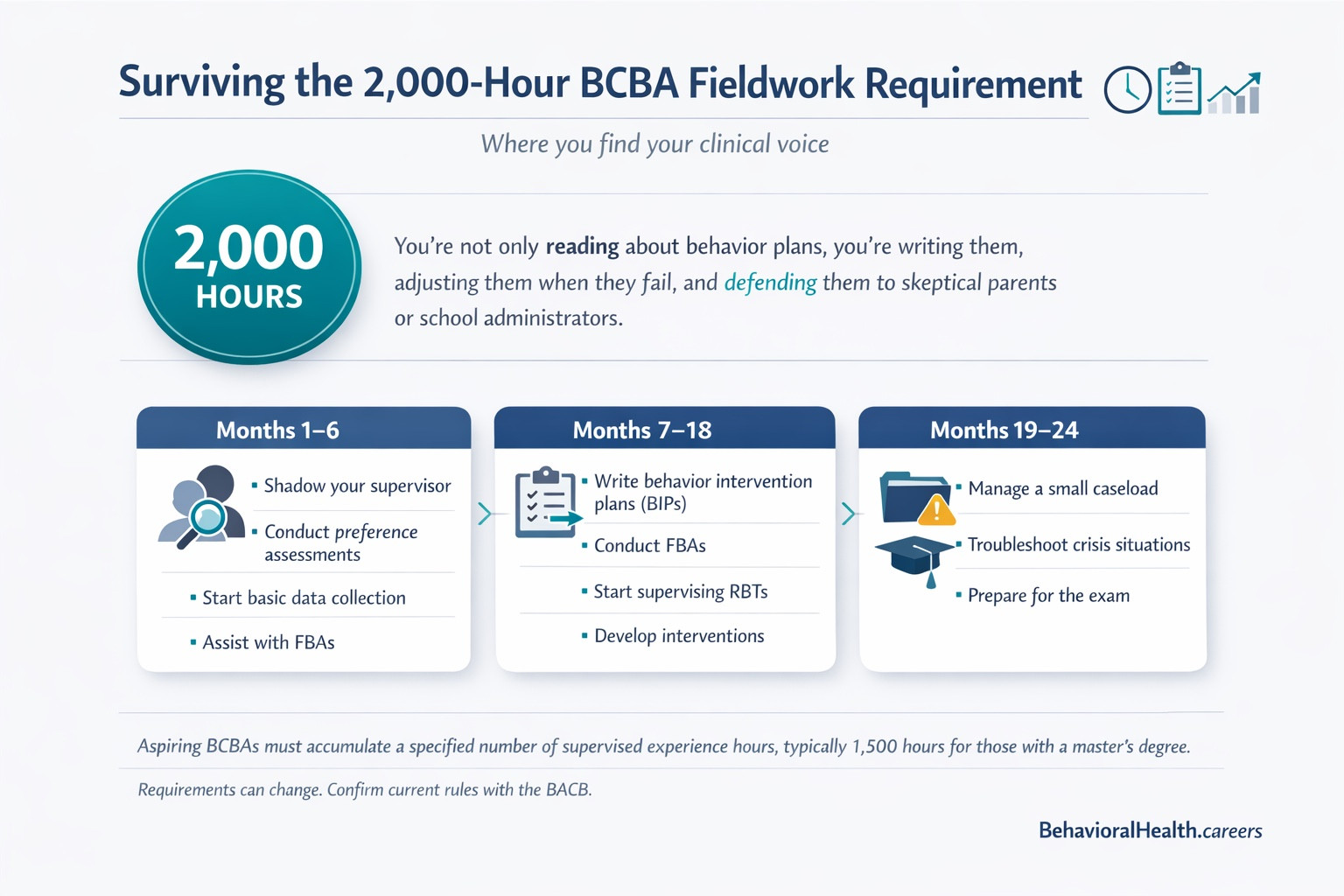
The 2,000-hour fieldwork requirement is where you find your “clinical voice.”
You’re not only reading about behavior plans, you’re writing them, adjusting them when they fail, and defending them to skeptical parents or school administrators.
Here’s what actually happens:
- Months 1-6: You’ll shadow your supervisor, conduct preference assessments, and start basic data collection. You will also begin conducting assessments, including conducting functional behavior assessments, to better understand and address an individual's behavior and identify specific behaviors that need intervention.
- Months 7-18: You’ll write behavior intervention plans (BIPs), conduct functional behavior assessments (FBAs), and start supervising RBTs. Fieldwork includes developing and implementing behavior analytic interventions tailored to client needs.
- Months 19-24: You’ll manage your own small caseload, troubleshoot crisis situations, and prepare for the exam.
Aspiring BCBAs must accumulate a specified number of supervised experience hours - typically 1,500 hours for those with a master's degree.
Choosing a fieldwork site: This is critical. Not all supervision is equal. Ask these questions before you commit:
- Is the supervision paid or unpaid? Many agencies hire you as a BCaBA or “BCBA Candidate” and pay you while you accrue hours.
- What’s the supervisor-to-supervisee ratio? If your BCBA is supervising 10+ candidates, you won’t get quality feedback.
- Will you get direct observation hours? The BACB requires at least 5% of your total hours to be face-to-face supervision, don’t accept email-only oversight.
- What’s the caseload like? If the agency prioritizes billable hours over training, you’ll burn out before you’re certified.
BCBA Certification Process: Steps and Strategies
The path to becoming a Board Certified Behavior Analyst (BCBA) is designed to ensure that every certified professional has a comprehensive understanding of behavior analysis and the practical skills to apply it effectively.
The BCBA certification process starts with meeting eligibility requirements, which include earning a graduate degree in behavior analysis or a related field and completing a Verified Course Sequence (VCS) that covers all the essential content areas.
Aspiring BCBAs must also complete supervised fieldwork, gaining hands-on experience under the guidance of a qualified supervisor. This supervised independent fieldwork is where you’ll develop the analytical skills and intervention strategies needed to address real-world behavioral challenges.
Once you’ve met these requirements, the final step is passing the BCBA exam: a rigorous test of your knowledge and application of behavior analysis principles.
To maximize your chances of success, focus on selecting a VCS-aligned degree program, seek out quality supervision for your fieldwork, and dedicate time to thorough exam preparation.
By following these strategies, you’ll be well-equipped to navigate the BCBA certification process and launch a rewarding career in applied behavior analysis.
State Licensure and Certification: Navigating Local Requirements
While earning your BCBA certification is a major milestone, it’s important to remember that some states have additional licensure or certification requirements for practicing behavior analysts.
These local regulations can affect your ability to provide services, bill insurance, or secure certain job postings.
Meeting these requirements means researching your state’s specific rules: some may require a separate license, ongoing continuing education, or additional documentation beyond your national BCBA certification.
Staying informed and compliant ensures you can practice legally and confidently, whether you’re working in private practice, schools, or healthcare settings.
Always check with your state’s licensing board or professional association to make sure you meet all local requirements before you begin practicing as a BCBA.
What is the BCBA Salary Landscape in 2026 and Going Forward?
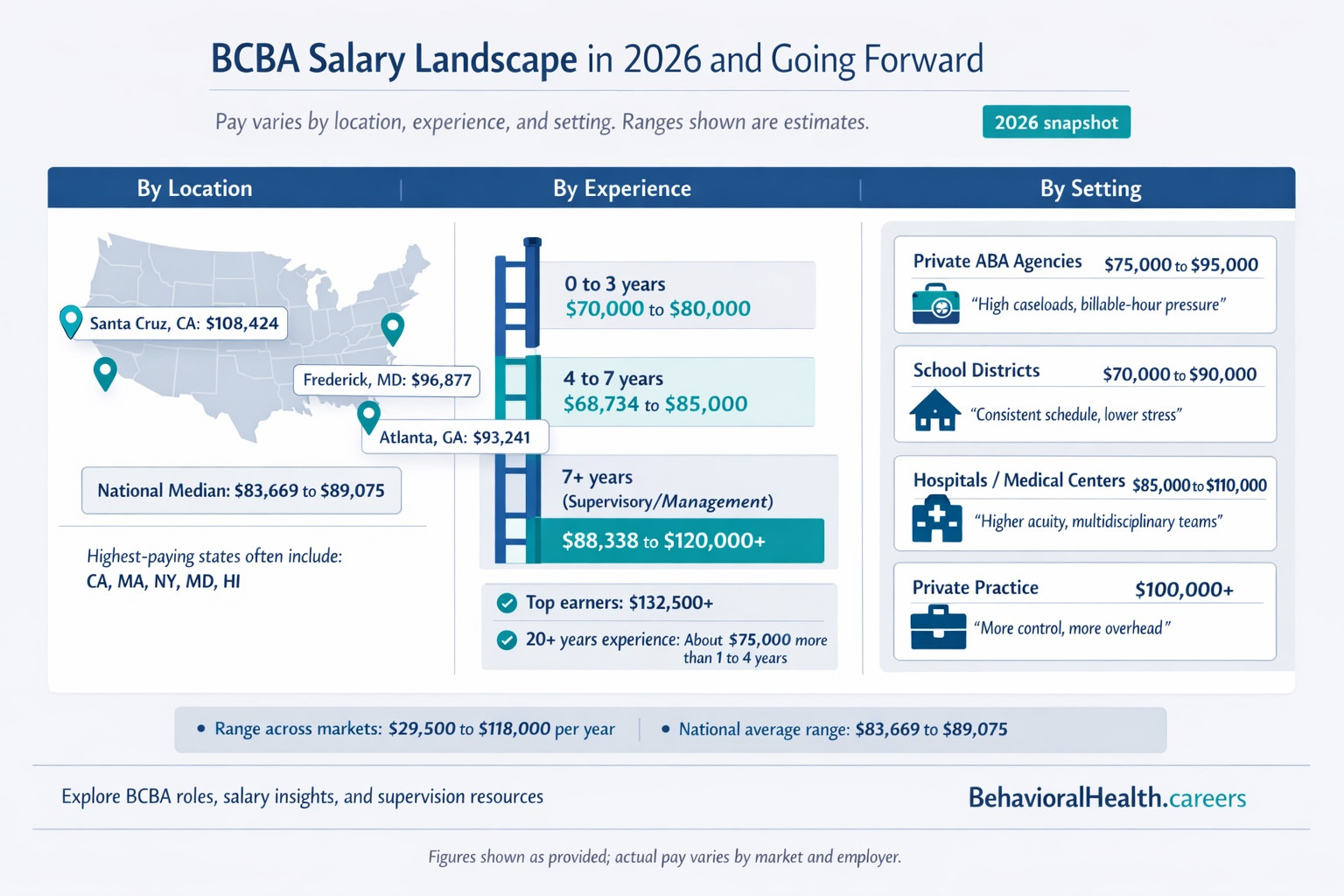
BCBA salaries are influenced by several factors, including experience, education, geographic location, and work setting.
The average annual salary for BCBAs can vary based on these elements, with salaries ranging from $29,500 to $118,000 per year depending on various factors.
The national average salary for BCBAs is $83,669 to $89,075, but that number shifts dramatically based on geography, experience, and work setting. Here’s the breakdown:
By Location:
- Miami, Florida: $111,736
- Santa Cruz, California: $108,424
- Frederick, Maryland: $96,877
- Atlanta, Georgia: $93,241
- National Median: $83,669–$89,075
California, Massachusetts, New York, Maryland, and Hawaii are among the highest paying states for BCBAs.
By Experience:
- 0-3 years: $70,000–$80,000
- 4-7 years: $68,734–$85,000
- 7+ years (supervisory/management): $88,338–$120,000+
- Top earners (90th percentile): $132,500+
BCBAs with 20 or more years of experience can earn an average of $75,000 more annually compared to those with 1-4 years of experience.
By Setting:
- Private ABA agencies: $75,000–$95,000 (high caseloads, billable hour pressure)
- School districts: $70,000–$90,000 (consistent schedule, lower stress)
- Hospitals/medical centers: $85,000–$110,000 (higher acuity, multidisciplinary teams)
- Private practice: $100,000+ (self-employed, you set the terms but also the overhead)
BCBAs can potentially earn six figures annually, especially if they practice independently or hold leadership positions.
States like California, Massachusetts, and New Jersey consistently pay above the national average due to higher demand and cost-of-living adjustments. Meanwhile, rural areas or states with lower ABA insurance mandates (Alabama, Wyoming, Montana) pay closer to the lower end of the range.
What this means for you: If salary is your priority, target metro areas with strong autism insurance mandates and high ABA provider shortages. But also factor in cost of living, a $111,000 salary in Miami may stretch further than $108,000 in Santa Cruz when you account for housing costs.
Career Opportunities and Settings for BCBAs
A BCBA credential opens the door to a wide range of career opportunities across diverse settings.
Board Certified Behavior Analysts are in high demand in schools, clinics, hospitals, and private practices, where they work with individuals facing autism spectrum disorders, developmental disabilities, and other behavioral challenges.
Beyond direct client work, BCBAs can specialize in Organizational Behavior Management (OBM), applying behavior analytic principles to improve workplace performance and culture.
Many BCBAs also move into leadership roles, supervising other professionals, managing programs, or consulting with organizations to address complex behavioral issues.
With job growth projected to remain strong, the BCBA career path offers both stability and the chance to make a meaningful impact in the lives of others.
The "Non-Autism" Pivot: Beyond Early Intervention
While 82% of BCBAs work in autism services, the field is expanding into less saturated areas. BCBAs use ABA therapy to help clients acquire new skills and address a wide range of behavioral challenges across various settings.
They develop behavior intervention plans (BIPs) tailored to each individual's needs and can work with individuals of all ages, from young children to adults, with diverse behavioral needs.
If you’re looking to differentiate yourself or avoid the burnout cycle of high-volume early intervention, these specializations are growing:
Organizational Behavior Management (OBM):OBM applies ABA principles to workplace productivity, safety, and leadership training. Companies hire BCBAs to reduce turnover, improve safety compliance, and increase sales performance.
Median pay: $85,000–$120,000. You’ll work in corporate settings, consulting firms, or as an independent contractor.
School-Based Behavior Support:School districts hire BCBAs to design Positive Behavioral Interventions and Supports (PBIS) programs, train teachers, and manage district-wide behavior data. This setting offers consistent hours (no evenings or weekends) and lower caseloads than private agencies.
Median pay: $70,000–$90,000.
Geriatric Behavioral Health: As the aging population grows, BCBAs are increasingly hired to address dementia-related behaviors, improve medication compliance, and reduce caregiver stress in assisted living facilities.
Median pay: $80,000–$100,000. This is a blue ocean market, very few BCBAs specialize here, so you’re highly marketable.
Forensic ABA:Working with justice-involved populations (juvenile detention, probation departments) to reduce recidivism and improve behavioral outcomes. This niche requires additional training in trauma-informed care but pays $85,000–$110,000.
The BCBA Burnout Reality
Here's the part most career guides skip: 72% of ABA professionals report burnout.
The culprit isn't the work itself, it's the billable hour model that treats you like a revenue generator instead of a clinician.
What happens: You're assigned 15-20 clients, each requiring monthly progress reports, quarterly reassessments, and parent training.
Meanwhile, you're supervising 5-8 RBTs who need weekly feedback. Administrative time isn't billable, so agencies pressure you to complete it outside your 40-hour week.
Within 18 months, you're working 50-60 hours per week, canceling supervision appointments, and dreading parent emails.
How to avoid it: Choose employers that prioritize manageable caseloads over raw billable hours. Ask these questions during interviews:
- What's the average BCBA caseload at this agency?
- How much administrative time is built into my schedule?
- What's the average tenure of BCBAs at this organization? (If it's under 2 years, that's a red flag.)
- Do you offer protected supervision time for fieldwork candidates?
You can also search for agencies that explicitly advertise salaried positions instead of fee-for-service models. Salaried roles reduce the pressure to hit arbitrary billing targets and give you more control over your schedule.
This is where our behavioral health-focused job board becomes essential.
Right here at BehavioralHealth.careers, you can filter specifically for BCBA jobs with posted salary ranges and read employer reviews to spot burnout factories before you apply.
Professional Development and Continuing Education for BCBA Roles
Staying at the forefront of the field is essential for every BCBA. The Behavior Analyst Certification Board requires certified behavior analysts to complete continuing education every two years, ensuring that their knowledge and skills remain current.
This ongoing professional development can include attending conferences, participating in workshops, enrolling in online courses, or joining professional organizations.
For those looking to advance further, options like the BCBA-D (doctoral-level certification) or specialization in areas such as Organizational Behavior Management can open new doors and enhance your ability to make a positive impact.
By committing to lifelong learning and professional growth, BCBAs not only maintain their certification but also continue to deliver high-quality, evidence-based services that improve outcomes for the individuals and communities they serve.
What Are the Next Steps to Becoming a BCBA?
If you are interested in pursuing a BCBA career path, you should follow these steps to set yourself up for success:
- Enroll in a BACB-verified Master’s program. Confirm it’s on the VCS list before you pay tuition.
- Find a fieldwork site that offers paid supervision. If you’re currently an RBT, ask your employer if they’ll promote you to a candidate role.
- Track your hours meticulously. Use the BACB’s fieldwork tracker or a spreadsheet. Don’t lose documentation.
- Join your state ABA chapter early. Networking opens doors to better fieldwork sites and job offers before graduation.
- Use salary-transparent job boards. Go to BehavioralHealth.careers and filter for BCBA roles with disclosed pay ranges. This saves you from wasting time on interviews that lowball you.
- Schedule the exam within 3 months of finishing coursework. The longer you wait, the more you’ll forget.
Note: Continued education is essential for professional growth and maintaining your BCBA certification.
Once certified, BCBAs must complete continuing education and recertify every two years to stay current and advance in their careers.
Subscribe to Our Daily Alerts and Launch or Enhance a BCBA Career
The BCBA path is long, but it's one of the behavioral health careers where demand outpaces supply by a wide margin.
If you're strategic about fieldwork placement, employer selection, and specialization, you'll build a career with both clinical impact and financial stability.
Start by filtering for salary-transparent BCBA roles today.
FAQs on BCBA Careers
Can I be a remote BCBA?
Yes, but it depends on your state and the type of services you provide. Many BCBAs now offer remote parent training, teletherapy, and consultation. However, you still need to be licensed in the state where your client resides due to interstate practice laws.
The BACB allows remote supervision, which expands your geographic reach. BCBAs can also take on leadership roles and supervise ABA therapists and Registered Behavior Technicians (RBTs).
How hard is the BCBA exam?
The pass rate hovers around 65-70% on the first attempt. The BCBA exam consists of 160 questions designed to test candidates' knowledge and skills related to behavior analysis. It’s not impossibly hard, but it requires structured study.
Most candidates use a combination of mock exams (BCBA Exam Prep, BDS Modules) and study groups. Allocate 8-12 weeks of dedicated prep time. To apply for the BCBA exam, candidates must submit relevant documents and fees through the BACB website.
Does my Master’s degree have to be specifically in ABA?
No. It can be in Psychology, Education, Special Education, or another related field: as long as you complete a BACB-verified course sequence.
Many people come from School Psychology or Clinical Psychology programs and complete the required ABA coursework separately.
What skills are essential for becoming a BCBA?
Becoming a BCBA requires excellent communication skills to interact with clients, families, and professionals. Critical thinking and strong analytical skills are necessary to analyze behavior, assess data, and develop effective intervention strategies.
Attention to detail is crucial when developing behavior intervention plans and monitoring client progress. Patience and empathy are also vital, as BCBAs work with clients who may need time to adapt and benefit from understanding their experiences.
What is BCBA-D certification?
BCBA-D certification is a doctoral-level credential that allows for higher-level research, teaching, and leadership opportunities within the field of behavior analysis.
What is the process for becoming a BCBA?
The process for becoming a BCBA involves completing the required education, BACB-verified coursework, supervised fieldwork hours, and passing the BCBA exam.