If you love the science of human behavior but don’t want to spend a decade in grad school or carry a clinical caseload of 40+ patients, psychometrist might be right fit: it is a behavioral health career most people have never heard of.
This guide breaks down what psychometrists actually do, where they work, what they earn in 2026, and how to build a career in psychological testing without the full weight of becoming a licensed psychologist.
Psychometrists are becoming an in-demand position due to increased utilization since 2006, and the job outlook is promising with projected growth of 5.8% through 2034.
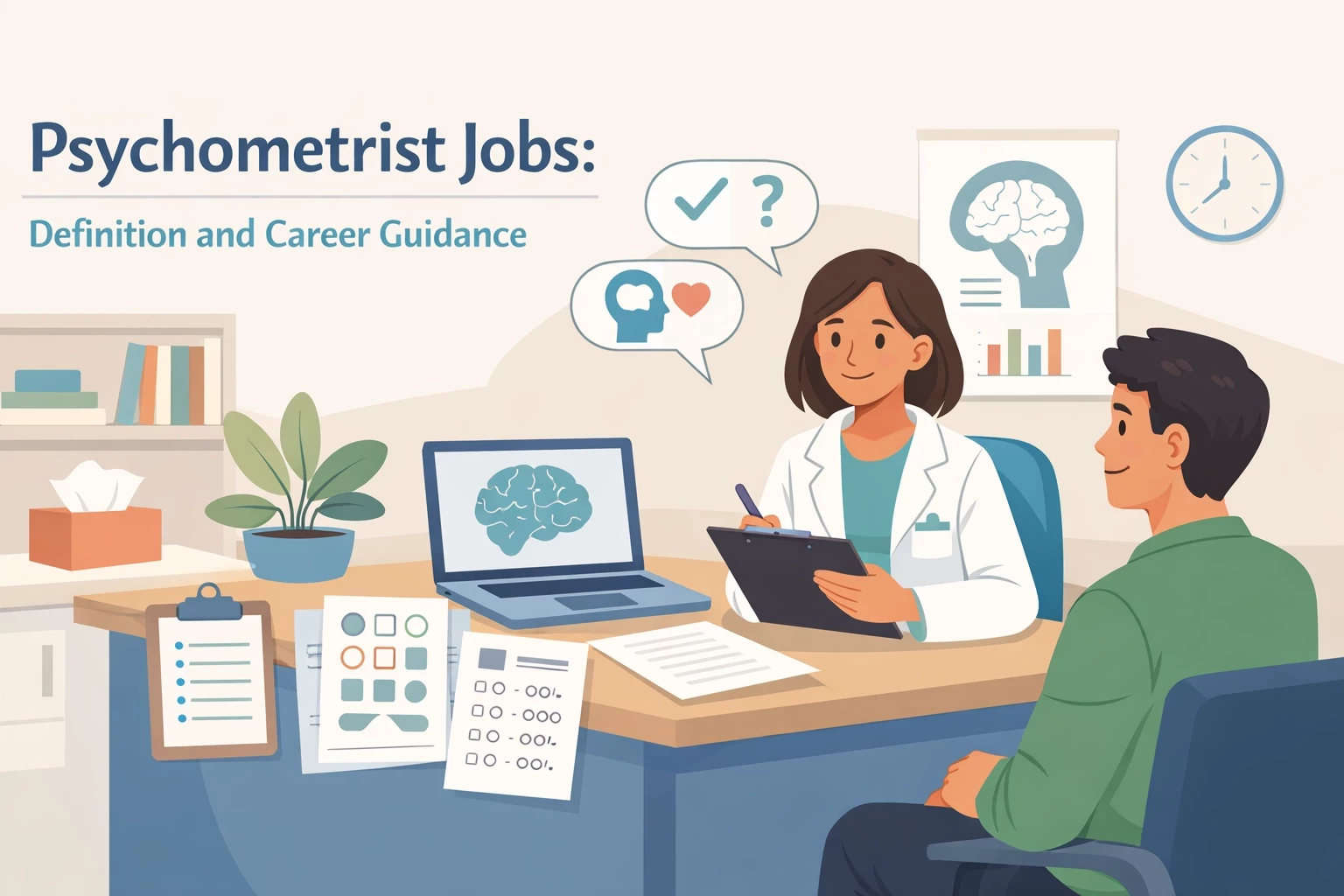
At a Glance: Psychometrist Career Snapshot
- What they do: Administer and score psychological and neuropsychological tests under the supervision of licensed psychologists
- Typical education: The minimum education level is a bachelor’s degree in psychology or a related field from an accredited institution. Most psychometrists hold either a bachelor's or master's degree; having a master's degree in a related field can give psychometrists an advantage when seeking jobs.
- Certification: CSP (Certified School Psychometrist) or state-specific credentials
- 2026 median salary: $60,000–$70,000 depending on setting and experience. The U.S. Bureau of Labor Statistics reports a national salary range for psychometrists between $25,000 and $58,000 annually.
- Work settings: Hospitals, research institutions, private practices, school districts, corporate HR departments
- Who it’s for: People who want to work in mental health jobs without the clinical licensure grind
What Is a Psychometrist? The Unsung Heroes of Testing
A psychometrist is a mental health professional who administers, scores, and documents standardized psychological tests. Think of them as the bridge between a patient and a diagnosis.
Psychometrists administer and score psychological and neuropsychological tests under the supervision of a clinical psychologist or neuropsychologist.
They work under the direction of a clinical psychologist to provide information from test results that relate to a client's diagnosis, as well as their educational, surgical, and treatment plans.
Unlike psychometricians, who are involved in developing psychological tests, scales, and measures and focus on test design and statistical analysis, psychometrists apply these tests in clinical settings.
Psychometrists often evaluate conditions such as dementia, traumatic brain injuries, ADHD, and learning disabilities.
Here’s what makes this role distinct from other behavioral health careers:
- You don’t diagnose. That’s the supervising psychologist’s job.
- You do observe. Your behavioral notes during testing often reveal as much as the test scores themselves.
- You work with protocols. Tests are highly standardized, so precision and consistency matter more than clinical intuition.
Psychometrists are hired in settings where psychological testing volume is high: neuropsychology clinics, research hospitals, forensic evaluation centers, and school districts conducting psychoeducational assessments.
Day-to-Day: Not Just Handing Out Worksheets
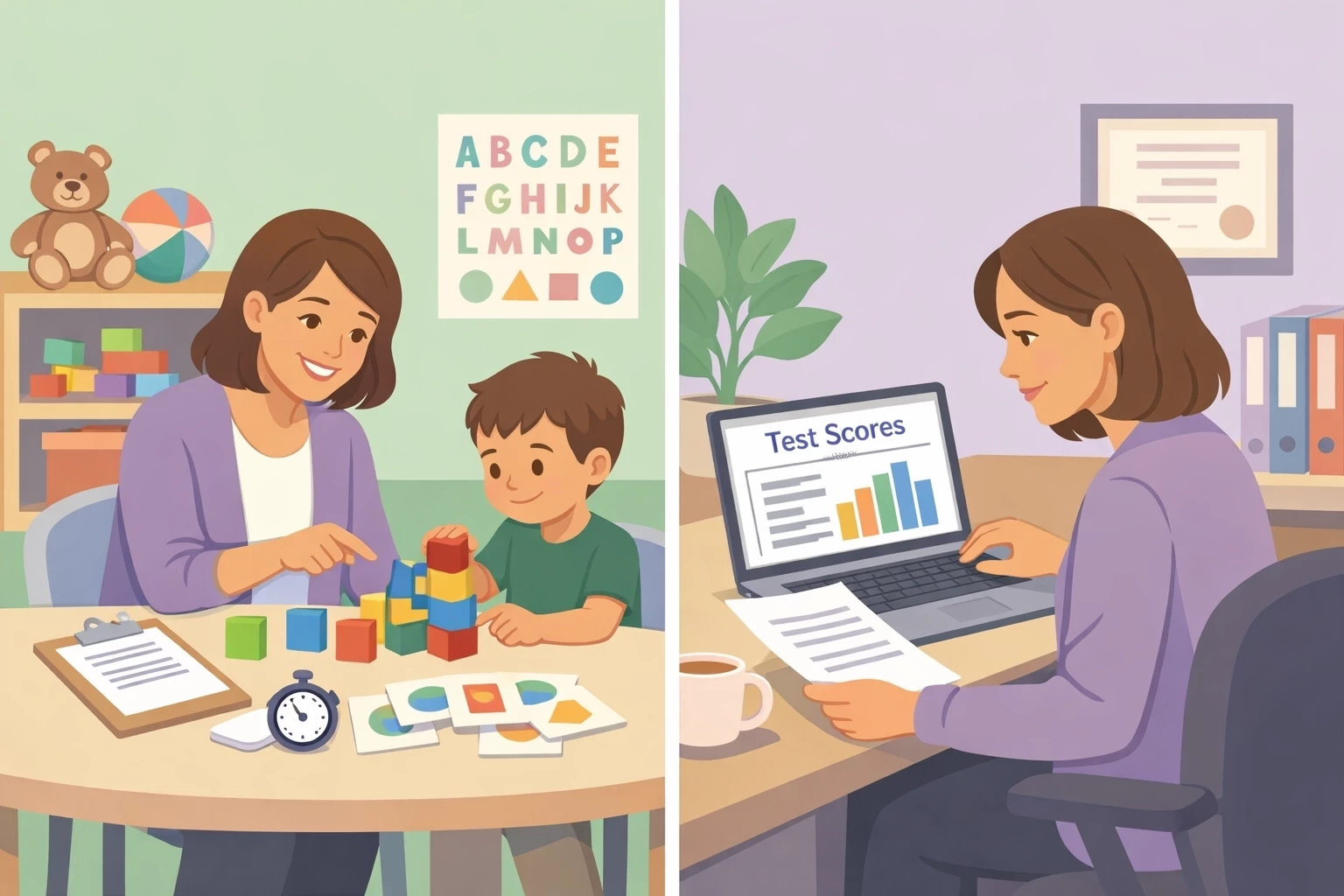
A typical day involves far more nuance than “give test, collect answers, score results.”
Some of the main duties include:
- Preparing test materials and ensuring all equipment is ready
- Explaining procedures to clients and answering questions
- Administering standardized tests according to strict protocols
- Observing and recording client behavior during testing
- Scoring tests and compiling data for review by a supervising psychologist
Psychometrists must manage the testing environment to foster optimal performance from the client during assessments.
The testing performed by psychometrists can range from brief evaluations to comprehensive assessments lasting several hours.
Building Rapport Before the First Question
Patients arriving for testing are often anxious. A child being evaluated for a learning disability doesn’t understand why they’re missing recess.
An adult undergoing a traumatic brain injury assessment may feel frustrated by memory lapses.
Your first job is to create a testing environment where performance reflects ability, not anxiety.
This means:
- Explaining what’s about to happen in plain language
- Adjusting your tone to match the patient’s age and cognitive state
- Watching for signs of fatigue, frustration, or disengagement mid-test
- Knowing when to take breaks without compromising test validity
Psychometrists may also be responsible for patient scheduling and other administrative duties, such as collecting personal information, billing, and coding procedures for insurance payments.
Observing What the Test Doesn't Measure
Scores are only half the story. For this job, the how matters as much as the what.
A psychometrist documents:
- Response patterns: Did the patient give up quickly on hard items or persist?
- Emotional regulation: Were there tears, outbursts, or shutdown moments?
- Processing style: Did they rush through or over-deliberate on simple tasks?
- Physical behaviors: Hand tremors, difficulty holding a pencil, speech delays
- Detailed behavioral observations: Comprehensive notes on client behaviors during testing
These detailed behavioral observations go directly into the assessment report and help psychologists interpret test results, understand client behaviors, and make accurate diagnoses or treatment recommendations.
Administering Tests Across Domains
A single evaluation might include:
- Cognitive assessments (WAIS, WISC, Stanford-Binet)
- Memory testing (WMS, CVLT)
- Personality inventories (MMPI, PAI)
- Neuropsychological batteries (Halstead-Reitan, Luria-Nebraska)
- Achievement tests (WIAT, Woodcock-Johnson)
- Academic tests (various standardized assessments)
Psychometrists administer and accurately score such tests to assess learning disabilities, mental health conditions, and brain injuries. Accurately scoring tests is essential to ensure the validity and reliability of assessment results.
Sessions can last 6–8 hours, often spread across multiple days. Sessions can include full-day evaluations with multiple assessments and extensive observation periods. You might work with only one or two patients per day because of the intensity and precision required.
Where Psychometrists Work: Clinical, Research, and Other Settings

Psychometrists aren’t locked into clinical settings. They work for local, state, and federal government agencies, as well as schools, hospitals, private practices, and nonprofit organizations.
Most psychometrists work in clinical settings, such as hospitals, clinics, or schools, where they interact directly with patients. The skills transfer across industries.
Clinical Settings
- Neuropsychology practices: Working with patients recovering from stroke, TBI, or dementia
- Psychiatric hospitals: Assessing mood disorders, ADHD, autism spectrum conditions
- Pediatric clinics: Conducting developmental and learning disability evaluations
- Forensic psychology offices: Testing for competency evaluations and legal cases
In these clinical settings, psychometrists administer assessments and support clinical practice, helping psychologists focus on client consultation and therapy while advancing the field through their specialized skills.
Research Institutions
- University labs: Administering cognitive tests for studies on aging, substance use, or brain injury
- Pharmaceutical trials: Tracking cognitive outcomes in drug efficacy studies
- Government agencies: Supporting large-scale epidemiological or public health research
Organizational and Business Contexts
Some psychometrists shift into talent assessment roles, where they:
- Administer personality and cognitive assessments for hiring pipelines
- Analyze employee strengths for training and leadership development
- Provide data-driven insights into team dynamics and organizational culture
This crossover makes psychometrist training surprisingly versatile if you decide clinical work isn't your long-term fit.
Psychometrist Salary Insights for 2026
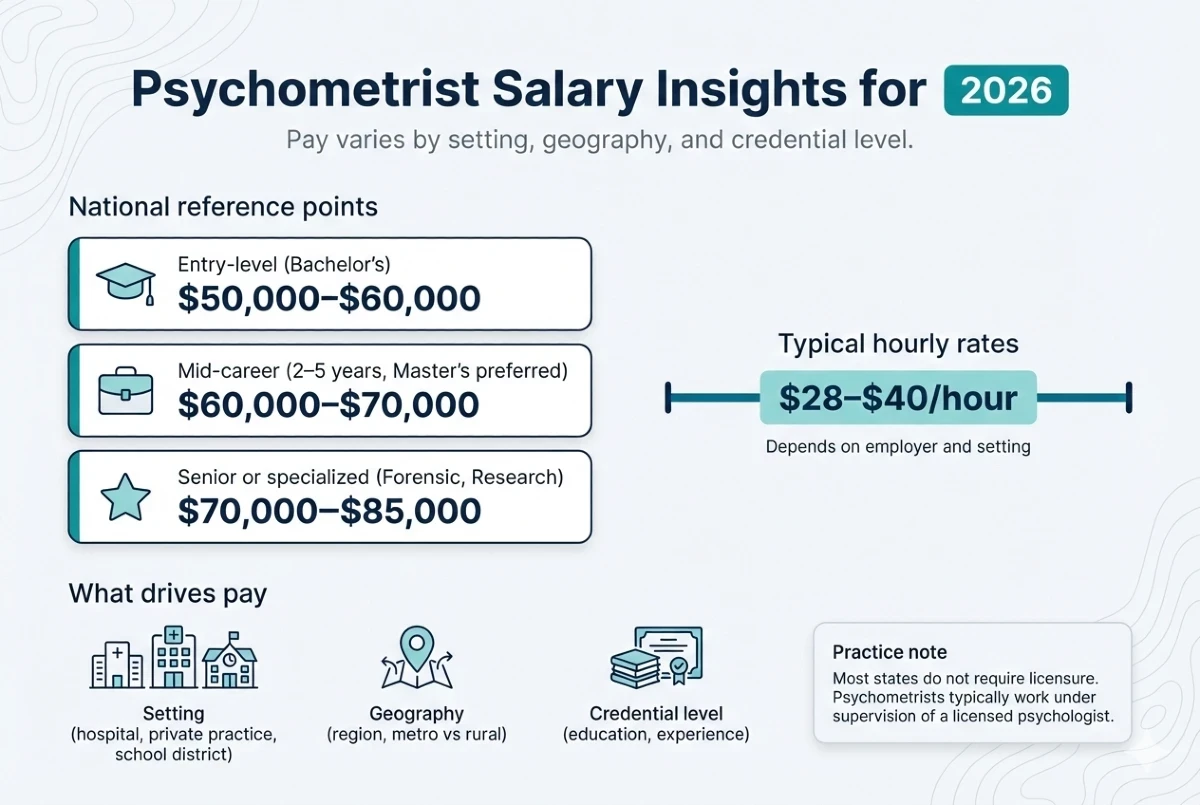
Psychometrist salaries vary by setting, geography, and credential level. Psychometrists vary in salary and licensure requirements depending on location, experience, and state regulations.
Most states do not require psychometrists to obtain a license to practice, but they must work under the supervision of a licensed psychologist.
National reference points:
- Entry-level (bachelor’s degree): $50,000–$60,000
- Mid-career (2–5 years, master’s preferred): $60,000–$70,000
- Senior or specialized roles (forensic, research): $70,000–$85,000
Hourly rates typically range from $28–$40/hour, depending on whether you’re employed by a hospital system, private practice, or school district.
Psychometrists typically work a standard 37-to-40 hour work week, although overtime and weekend work may be required depending on the location, especially in hospitals or private practices during busy periods or to accommodate scheduling demands.
Clinical settings in high-cost-of-living areas (California, New York, Massachusetts) often pay at the higher end. Research positions may offer slightly lower base pay but better work-life balance and predictable hours.
Salary transparency note: Unfortunately, many job postings for psychometrist roles still omit pay ranges. When you apply, ask early. Employers committed to fair hiring will clarify compensation upfront.
Explore current openings at BehavioralHealth.careers to see real-time salary data and filter by location and setting.
Career Path: From Bachelor's to Certified Specialist
Step 1: Bachelor's Degree in Psychology
Most psychometrists start with an undergraduate degree in psychology or a related behavioral science field, as this is the minimum education level required to enter the profession.
Coursework should include:
- Psychological testing and measurement
- Research methods and statistics
- Abnormal psychology
- Developmental or cognitive psychology
Some programs offer explicit “psychometry” concentrations, but they’re not required. What matters is exposure to testing principles and data analysis.
Step 2: On-the-Job Training
Newly hired psychometrists typically spend their first 3 to 6 months shadowing experienced clinicians and learning test administration protocols under supervision.
You'll practice on volunteer subjects before working with real patients. Psychologists will review your scoring accuracy and provide feedback on rapport-building techniques.
Step 3: Certification is Optional Although Common
Certified School Psychometrist (CSP) is the most recognized credential, offered through the National Association of School Psychologists (NASP). It’s designed for those working in educational settings but signals competency across contexts.
The Certified Specialist in Psychometry (CSP) is the only professional certification specifically for psychometrists. The CSP exam, administered by the Board of Certified Psychometrists, consists of multiple-choice questions covering psychometric theory, test administration, scoring, and ethics; passing this exam is required for certification and demonstrates professional competency.
In order to be certified, you must have a bachelor's degree from a regionally accredited college or university and a minimum of 3,000 hours of testing, scoring, and associated administrative experience under the supervision of a licensed psychologist or neuropsychologist.
To maintain the CSP credential, you must obtain a minimum of 20 continuing education units (CEUs) every two years, with at least three in ethics. Some states require psychometrists to be registered with the state board of psychology and may assign a title such as Licensed Psychological Assistant (LPA).
Requirements include:
- 60 graduate-level semester hours in psychology or education
- Supervised practicum experience
- Passing the Praxis School Psychologist exam
Some states have their own psychometrist licenses or registration processes. Check your state’s board of psychology or education for specifics.
Step 4: A Master's Degree For Advancement
A master's in psychology, clinical psychology, or neuropsychology opens doors to:
- Senior psychometrist roles with higher autonomy
- Research coordinator positions in academic or hospital settings
- Transition pathways into school psychology or clinical psychology doctoral programs
If you love the testing work but want more responsibility, a master's degree is the lever. If you're satisfied with the technical specialist role, you can build a long-term career at the bachelor's level.
What are the Benefits of a Psychometrist Role?
Psychometrist is one of the few role in the behavioral health space where you can:
- Work in mental health without a clinical license and the liability that comes with it (most states do not require psychometrists to obtain a license to practice, but they must work under the supervision of a licensed psychologist)
- Engage deeply with patients without managing treatment plans or crises
- Use your brain for precision work if you like data, protocols, and structured tasks
- Keep normal business hours in many settings (research and schools, especially)
- Pivot into adjacent careers if your interests shift
It’s also a strong entry point for people considering doctoral programs.
Spending a few years as a psychometrist gives you firsthand exposure to assessment, clinical environments, and patient populations before committing to 5–7 more years of school.
On the flip side, it’s a sustainable long-term career if you value:
- Predictability and routine
- Working as part of a clinical team without solo caseload pressure, often collaborating with other psychometrists for peer support and professional development
- Specializing deeply in one skill set rather than wearing multiple hats
- Intellectual challenge without emotional exhaustion
What Skills Will You Need to Succeed as a Psychometrist?
Technical Precision
You’re working with standardized tests that require exact adherence to administration protocols. A single misstep in timing, wording, or sequence can invalidate results. After test completion, it is crucial to accurately score each assessment to ensure the validity and reliability of the results.
Attention to detail isn’t optional for this role. It’s a core part of the job.
Interpersonal Adaptability
You'll assess patients across the lifespan: preschoolers, teenagers in crisis, adults with brain injuries, elderly patients with dementia.
Your ability to adjust tone, pacing, and reassurance style based on who's in front of you determines whether you get valid data or a frustrated patient who shuts down.
Analytical Thinking
Scoring isn’t always automated. You’ll interpret raw scores, apply norms, and cross-reference results across multiple test instruments. Test results are key to determining diagnoses, treatment plans, and eligibility for services, so accurate scoring and analysis are essential.
You also need to spot inconsistencies: when a patient’s verbal responses don’t match their behavioral presentation, that’s information.
Cultural Competence
Psychological tests were historically normed on narrow populations. You need awareness of how language, education, and cultural background affect test performance: and how to document those factors in your reports.
Emotional Regulation
Testing sessions can be emotionally heavy. You'll witness patients struggle with cognitive decline, children grapple with learning disabilities, and families receive life-altering diagnostic information.
You're not providing therapy, but you do need resilience and professional boundaries.
How to Get Started in a Psychometrist Role: Next Steps
If this sounds like your kind of work, here’s the tactical pathway:
- Search for entry-level psychometrist roles or psychological testing assistant positions on BehavioralHealth.careers.
- Target settings that train in-house: Neuropsychology clinics, university hospitals, and school districts often hire bachelor’s-level candidates and provide training.
- Ask about supervision models during interviews. You want a setting where you’ll work closely with licensed psychologists who can mentor your development.
- Explore certification requirements in your state if you’re serious about long-term career growth.
- Build your testing toolkit knowledge by familiarizing yourself with common instruments (WAIS-IV, WISC-V, MMPI-3, WMS-IV).
Resources and Additional Information
Are you thinking about becoming a psychometrist? If so, you're going to want to tap into some amazing professional resources and organizations that can really help you get started and keep growing throughout your career.
The National Association of Psychometrists (NAP) is honestly your best friend here. This organization is like the gold standard for psychometrists, giving you access to educational materials that actually matter, networking opportunities where you can meet people who get what you do, and the latest scoop on best practices for psychological and neuropsychological tests.
You'll need to pass that certification exam from the Board of Certified Psychometrists. What does it take to qualify? You need a bachelor's degree from a regionally accredited college or university, plus at least 3,000 hours of real, hands-on testing, scoring, and administrative experience.
But NAP isn't your only option. The American Psychological Association (APA) is another treasure trove of information that you don't want to miss. They've got everything you could want to know about psychological testing, psychometric theory, and test design.