![[HERO] BehavioralHealth.careers Hiring Toolkit (2026)](https://cdn.marblism.com/Wz2gT3iJTVV.webp)
Who this is for: Workforce Deans, Association Managers, HR Directors, and Program Leaders hiring in mental health, addiction counseling, and applied behavior analysis (ABA) settings.
You're competing for talent in a workforce market where behavioral health roles are growing faster than most sectors.
The challenge: outdated salary data, confusing credential maps, and job posts that don't convert.
This toolkit gives you the essentials to post smarter, benchmark accurately, and connect with the right pipeline partners.
What's Inside
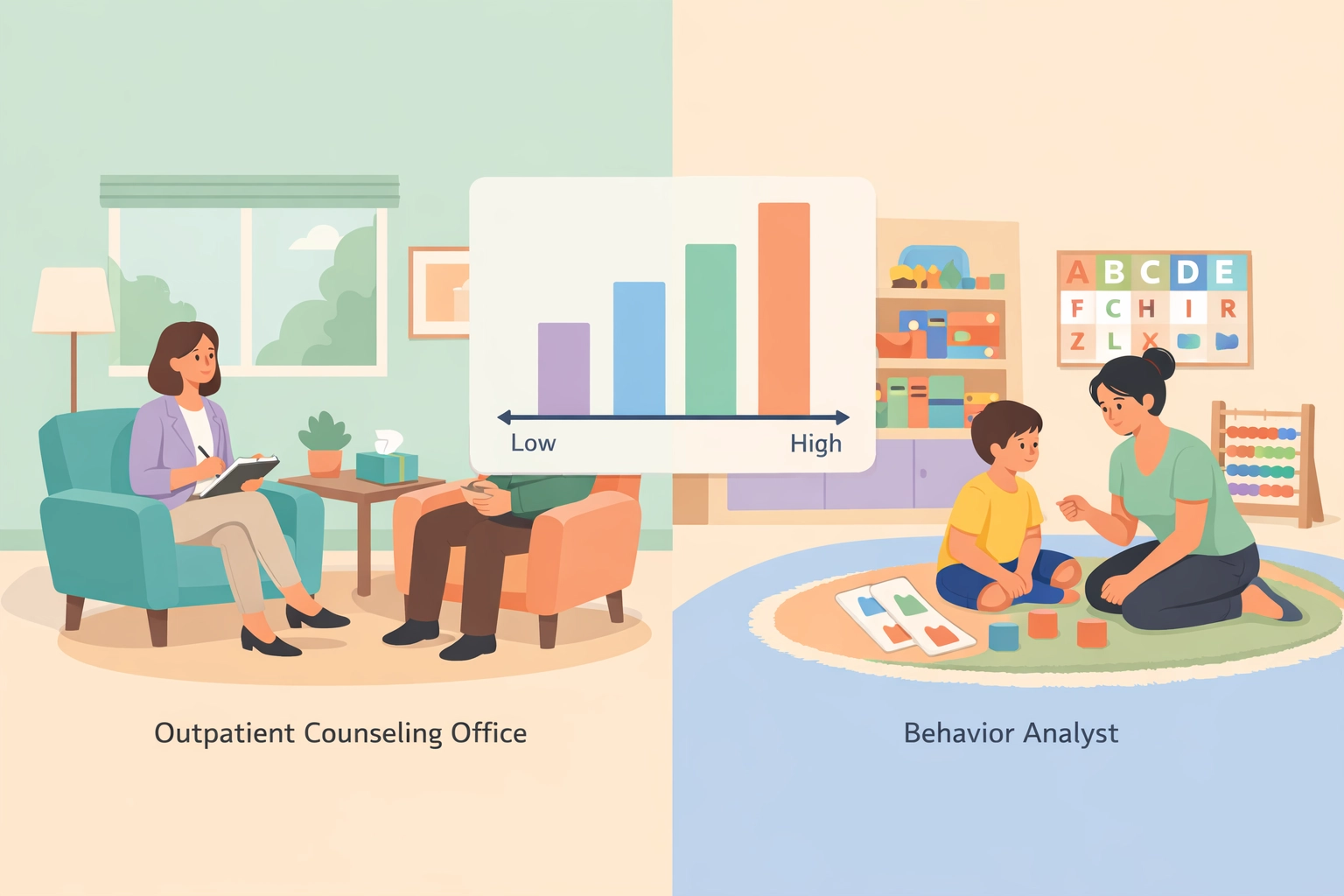
- Salary Benchmarks: Current median pay ranges for Licensed Clinical Social Worker (LCSW), Licensed Professional Counselor (LPC), Board Certified Behavior Analyst (BCBA), and Registered Behavior Technician (RBT) / Behavioral Health Technician (BHT) roles
- 60-Second Job Post Checklist: Five elements that improve applicant fit and reduce time-to-fill
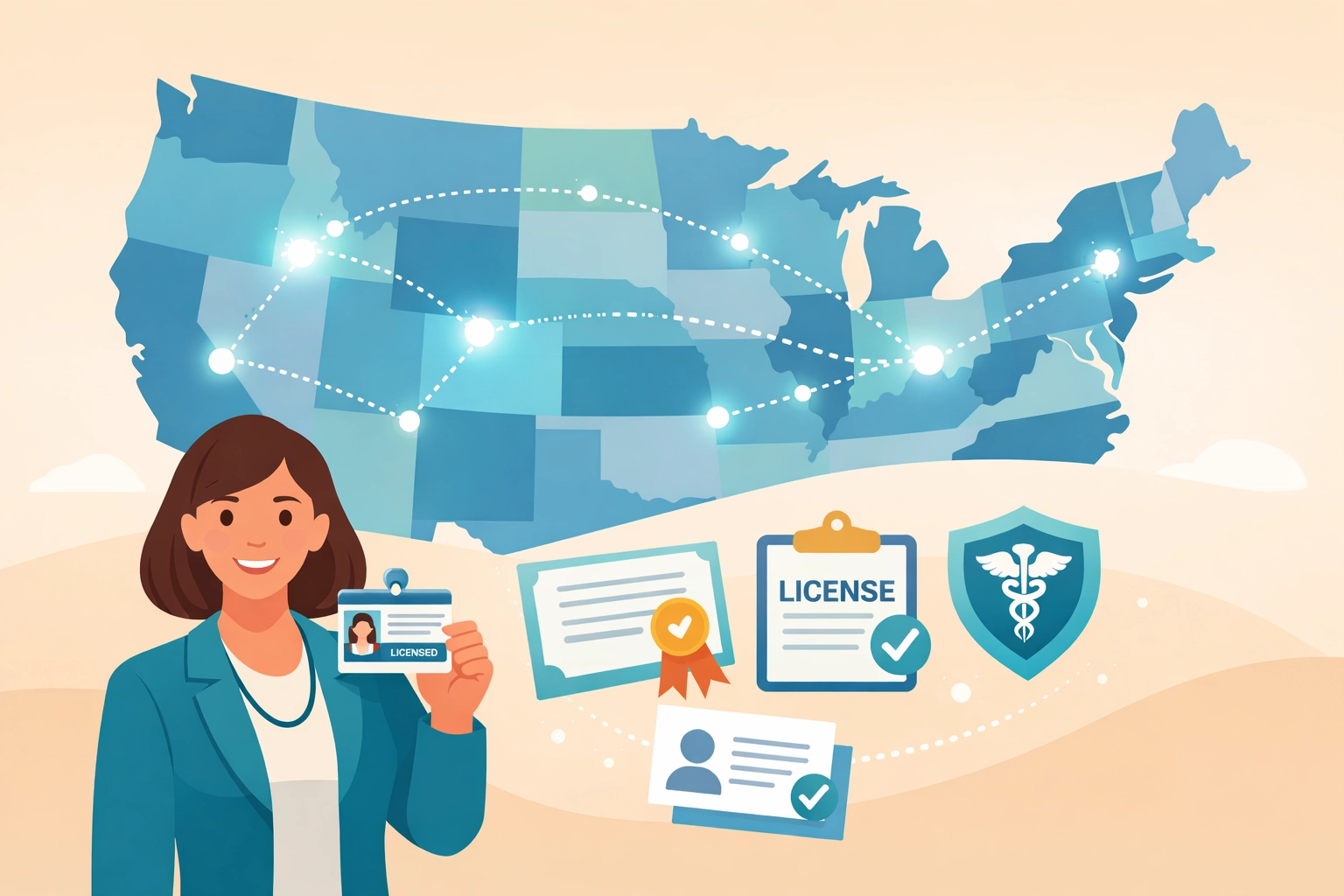
- State Credentialing Map: High-level guidance on licensure portability, including Counseling Compact status
- Top Partner Candidates: Organizations and programs to strengthen your recruitment pipeline

Salary Benchmarks: What to Expect in 2026
Pay transparency works. Job posts with salary ranges reduce application friction and help candidates self-select before they apply.
Below are national reference points blending US Bureau of Labor Statistics (BLS) data with real-time market signals from Payscale and Glassdoor.
Use these as starting points, then adjust for your region, setting, and candidate experience level.
Mental Health & Addiction Counseling Roles
Licensed Clinical Social Worker (LCSW)
- Median Annual: $59,000–$68,000
- Hourly Equivalent: $28–$33/hr
- Context: LCSWs work in hospitals, outpatient clinics, community mental health centers, and private practice. Pay scales higher in metro areas and integrated care settings. Supervision hours and specialty certifications (trauma, addiction) can push rates above median.
Licensed Professional Counselor (LPC)
- Median Annual: $52,000–$62,000
- Hourly Equivalent: $25–$30/hr
- Context: LPCs counsel individuals, families, and groups in mental health and substance use settings. Title varies by state: Licensed Mental Health Counselor (LMHC), Licensed Clinical Professional Counselor (LCPC). Rural and underserved area placements may qualify for loan repayment incentives through HRSA or state programs.
Applied Behavior Analysis (ABA) Roles
Board Certified Behavior Analyst (BCBA)
- Median Annual: $75,000–$95,000
- Hourly Equivalent: $36–$46/hr
- Context: BCBAs design and supervise behavior intervention plans, often in autism services, schools, and developmental disability programs. Certification through the Behavior Analyst Certification Board (BACB) is standard. Demand outpaces supply in most regions, especially for bilingual candidates.
Registered Behavior Technician (RBT) / Behavioral Health Technician (BHT)
- Median Hourly: $18–$25/hr
- Annual Equivalent: $37,000–$52,000 (full-time)
- Context: RBTs implement behavior plans under BCBA supervision. BHT is a broader umbrella term for paraprofessional support roles in residential, crisis, and community settings. High turnover in this role cluster makes competitive pay and clear advancement pathways critical.
Reality check: These ranges reflect national aggregates. Actual pay varies by state cost of living, payer mix (Medicaid vs. commercial insurance), and whether you're hiring for inpatient, outpatient, school-based, or telehealth roles. Always benchmark locally.
60-Second Job Post Checklist
A strong job post answers the candidate's first three questions before they click "Apply." Use this checklist to audit your current postings or draft new ones:
[ ] Salary range included
State the annual or hourly pay band. If you're posting exempt roles, include both annual and hourly equivalents for candidates comparing offers. Example: "$59,000–$68,000 annual ($28–$33/hr depending on experience)."
[ ] License or credential requirements clearly stated
Don't say "preferred" when you mean "required." If you'll accept candidates in licensure supervision, say so explicitly. Example: "LCSW required" or "LPC-Associate with clinical supervision available."
[ ] Setting and population described
Name the clinical environment and who you serve. Example: "Outpatient clinic serving adults with co-occurring SUD and mental health diagnoses" or "School-based ABA services for K–5 students."
[ ] Caseload or billable hour expectations disclosed
Candidates use this to assess sustainability. Example: "Avg. 22–25 client contact hours/week with admin time protected" or "Caseload of 12–15 active clients."
[ ] Supervision or professional development included
If you offer BCBA supervision hours, LCSW supervision toward independent licensure, or continuing education stipends, say so. These are differentiators in a competitive market. Example: "BCBA supervision provided for RBTs pursuing certification" or "Annual $750 CEU reimbursement."
What this means: Posts that check all five boxes see higher application completion rates and better candidate-job fit. Candidates can pre-screen themselves, and you spend less time reviewing mismatched applications.

State Credentialing Map: Licensure Portability Basics
Behavioral health credentials are state-issued, not federally standardized.
This creates friction for candidates relocating or working across state lines. Here's what hiring managers need to know:
The Counseling Compact (2026 Status)
The Counseling Compact allows Licensed Professional Counselors to practice across participating states without obtaining separate licenses in each state.
As of early 2026, over 30 states have enacted or are implementing Compact legislation.
Hiring implications:
- If you're in a Compact state, LPCs from other Compact states can begin work faster.
- Ask candidates whether they hold Compact Privilege or are applying for it.
- Supervision requirements and scope-of-practice rules still vary by state.
The Compact is not yet universal: Marriage and family therapists (LMFT) do not have a parallel Compact at this time, and social workers have a growing LCSW Licensure Compact.
ABA Credentialing and National Standards
BCBA and RBT certifications are issued by the Behavior Analyst Certification Board (BACB), a national credentialing body.
These credentials are recognized across all states, but some states add additional requirements:
- State licensure: A handful of states require BCBAs to obtain a separate state license on top of BACB certification (example: Nevada, California in some contexts).
- Background checks and facility-specific credentialing: Always required.
- RBT registry: RBTs must appear on the BACB registry and work under BCBA supervision. Verify active status before onboarding.
Reality check: Credential verification delays are common. Budget 2–4 weeks for BACB registry lookups, background clearances, and state board confirmations in your hiring timeline.
Top Partner Candidates for Pipeline Development
Building a sustainable hiring pipeline means partnering with the organizations that train, credential, and place your future workforce.
Below are high-value partners to explore:
National Associations & Workforce Initiatives
National Association of State Mental Health Program Directors (NASMHPD)
State-level mental health authority network. Connects employers with workforce development grants, policy updates, and regional training initiatives.
3rnet (National Rural Recruitment and Retention Network)
Nonprofit connecting behavioral health employers in rural areas and underserved areas with qualified candidates.
Useful for Federally Qualified Health Centers (FQHCs), Critical Access Hospitals, and community mental health centers.
Community College Districts (High-Volume Behavioral Health Programs)
Los Rios Community College District (California)
Offers addiction counseling, social work pathways, and ABA technician training pipelines.
Strong partnerships with Sacramento-area behavioral health employers.
San Diego Community College District (California)
Human services and behavioral health degree programs with embedded internship placements.
Active feeder into San Diego County's public mental health system.
Delaware Technical Community College (Delaware)
Human services and addiction counseling associate degree programs. Partners with state-funded SUD treatment providers for direct-to-hire pathways.
How to engage: Reach out to Career Services or Workforce Development offices at these institutions. Many offer job fairs, on-campus interviews, and internship-to-hire arrangements.
If you hire RBTs or BHTs at volume, ask about cohort hiring programs where you can onboard multiple graduates at once.
How to Use This Toolkit
For Workforce Deans: Share salary benchmarks with students preparing for job searches.
Use the credentialing map to clarify licensure timelines and reciprocity. Connect Career Services teams with the partner organizations listed above.
For Association Managers: Circulate this toolkit to member organizations hiring in behavioral health.
Use the 60-second checklist to audit member job boards for salary transparency and clarity.
For Employers: Bookmark this resource when drafting job posts. Cross-reference salary ranges with your local market data. If you're hiring across state lines, verify Counseling Compact eligibility for LPC candidates.
Track which pipeline partners yield the highest-quality hires and deepen those relationships.
Additional Resources
The behavioral health workforce is expanding, but hiring bottlenecks remain: unclear pay ranges, credential confusion, and fragmented recruitment pipelines.
This toolkit addresses the friction points you can control.
If you're ready to post a role or refine your hiring strategy, explore job posting options at BehavioralHealth.careers.
For guidance on specific roles, see our in-depth career guides:
- RBT Career Guide
- Behavioral Health Technician vs. Mental Health Technician vs. Psych Aide
- Therapist vs. Counselor vs. Social Worker vs. Psychologist vs. Psychiatrist
- The Collaborative Care Model for Mental Health: CoCM Guidelines
- Behavioral Health Utilization Review Jobs
- Psychiatric Technician Jobs 101: Our Complete Resource
Track credentialing changes, salary shifts, and Compact updates as they evolve.
The market moves faster than annual reports can capture. Stay close to the data, and adjust your approach accordingly.